
Egyptian Angular Bow
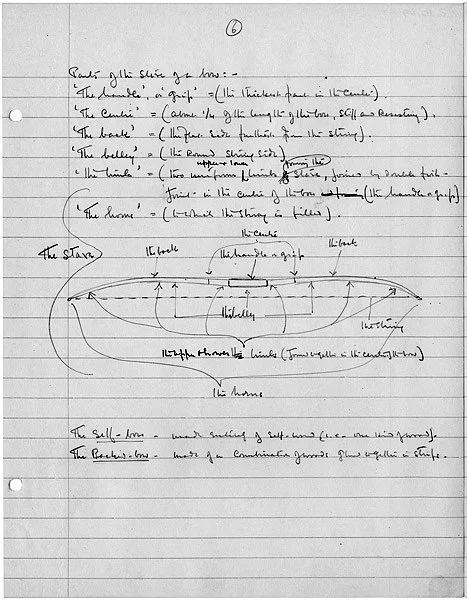
Many of the bows discovered in Pharaoh (king) Tutankhamen’s tomb by Howard Carter in 1922 during excavations in the Valley of the Kings are called Egyptian Angular Bows. As the name suggests, the bow takes a triangular shape when strung, and when unstrung, it forms a sort-of French moustache shape. However, when it’s drawn it becomes a beautiful crescent shape. It is also a reflex deflex profile. This, combined with the fact that it is a composite bow, allows it be shorter, faster, and more powerful than its lithic predecessors. This was a huge advancement in bow crafting technology.
It’s the oldest composite bow found archaeologically, “composite” meaning the bow is constructed from multiple materials. Starting with a wood core of either almond or acacia (a type of maple), it would be combined with the horn of a scimitar oryx (oryx dammah))1. The inside of the oryx horn would be removed, cut into a long rectangular strips, and straightened with heat. It would then be glued to the wooden core against its original curve. To finish it, sinew (tendon) from the hind leg of the oryx is processed and then glued onto the back. Hide glue would be used throughout the construction.
These bows would have been shot from chariots while in battle with Nubians, who had their own powerful bows.
This is the bow that takes us from tool to weapon as it was primarily used in warfare.
For more information on this amazing bow, see: <INSERT YOUTUBE REFERENCE HERE>
1. Listen to the podcast The Critter Shed, episode “Back from the brink: The Scimitar-Horned Oryx”