
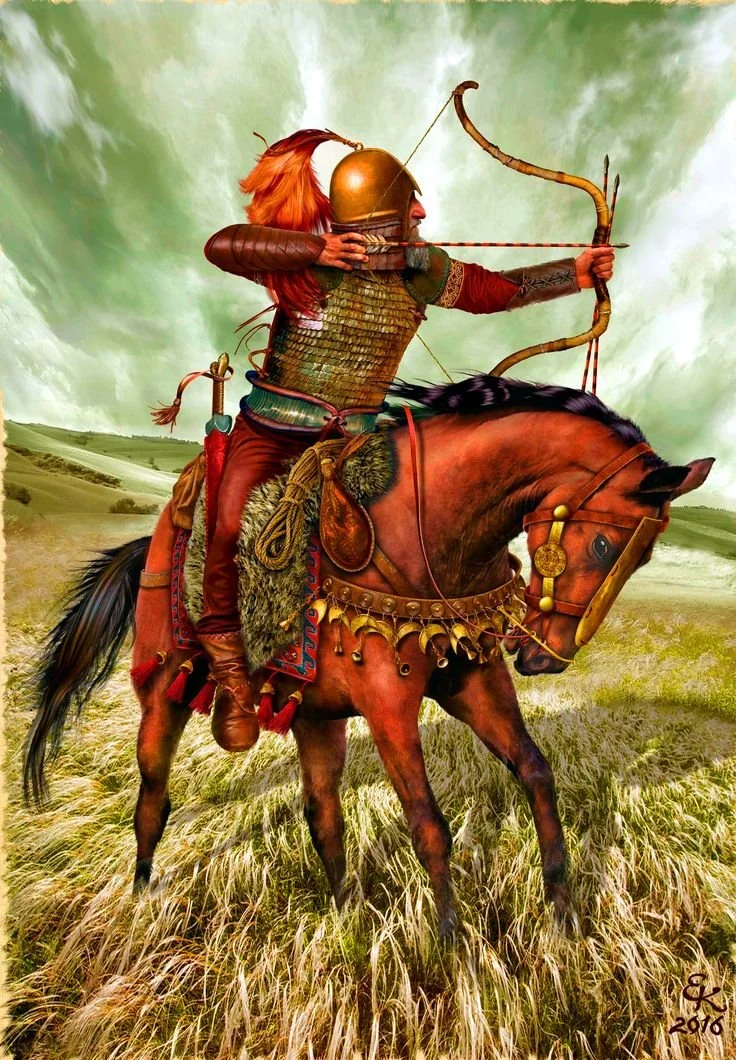
The Scythians were a nomadic horse riding peoples of The Steppe. Known for their efficient use of horse archery and their formidable sense of fashion, Scythians migrated from southern Siberia around 900 BCE to modern day China and to the west to the northern Black Sea (modern day Ukraine and parts of Russia) by 200 BCE.
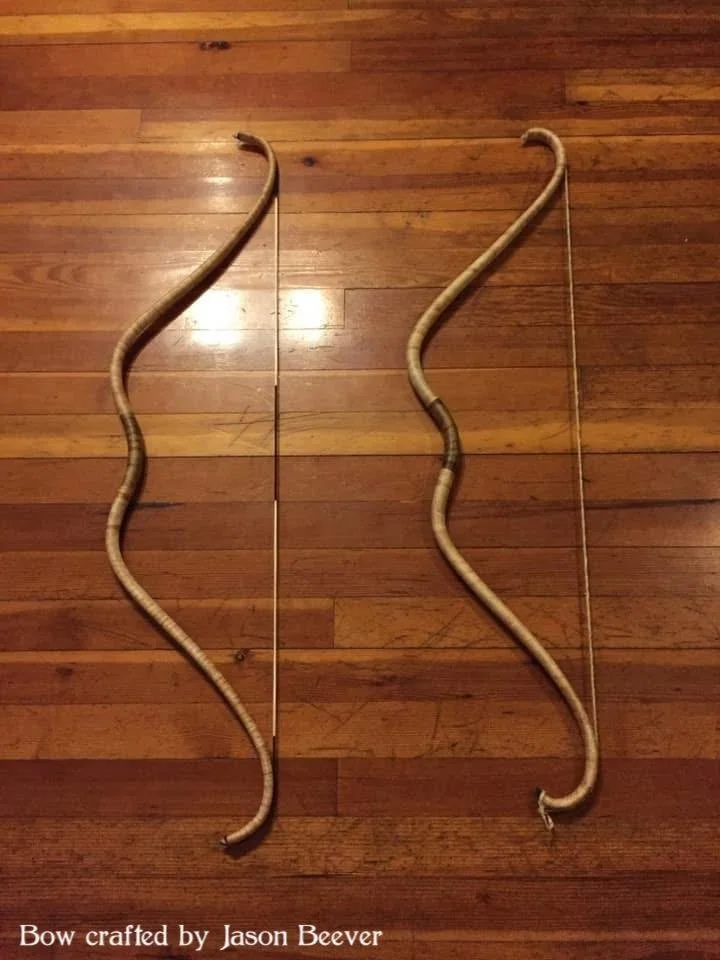
The Scythians used an incredibly powerful composite bow made of horn, wood, and sinew. When yielded from the horse it created a mobile, nearly unstoppable army of horse archers. Herodotus wrote that
“None who attacks them can escape, and none can catch them if they desire not to be found.”
Like the Egyptian Bow, it is one of the earliest composite bow designs, but more complex in its profile and cross section.
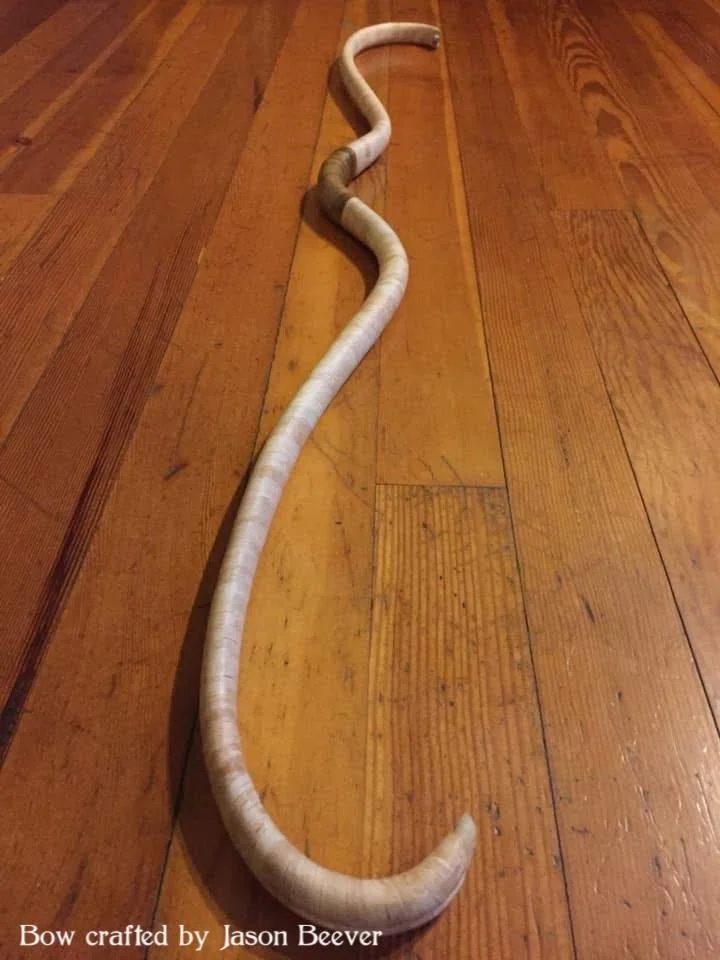
Unlike the Egyptian Angular Bow, this bow was recurve, which means the tips face away from the archer when strung, and is much smaller. In this case, they were exceptionally “curly”. As shown in the images on this page, their bow design exhibits a strong B-shaped curve. The horned plates would have been sourced from the inside curl of a Siberian Ibex’s horn, a wild relative of goats and sheep.
These bows in conjunction with domesticated horses and saddles (without stirrups) made them a well organized force sweeping across The Steppe as they migrated west.
For further information: